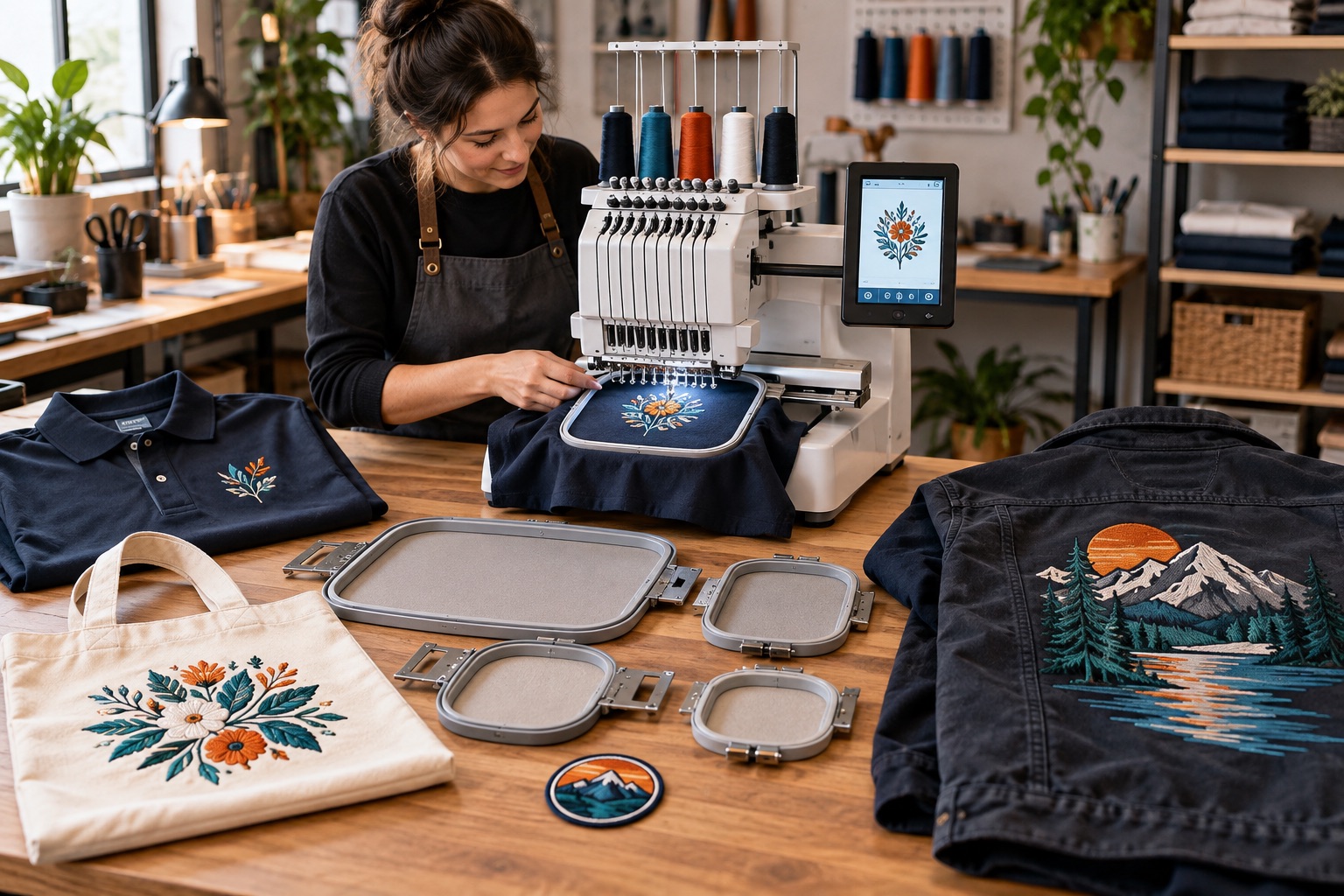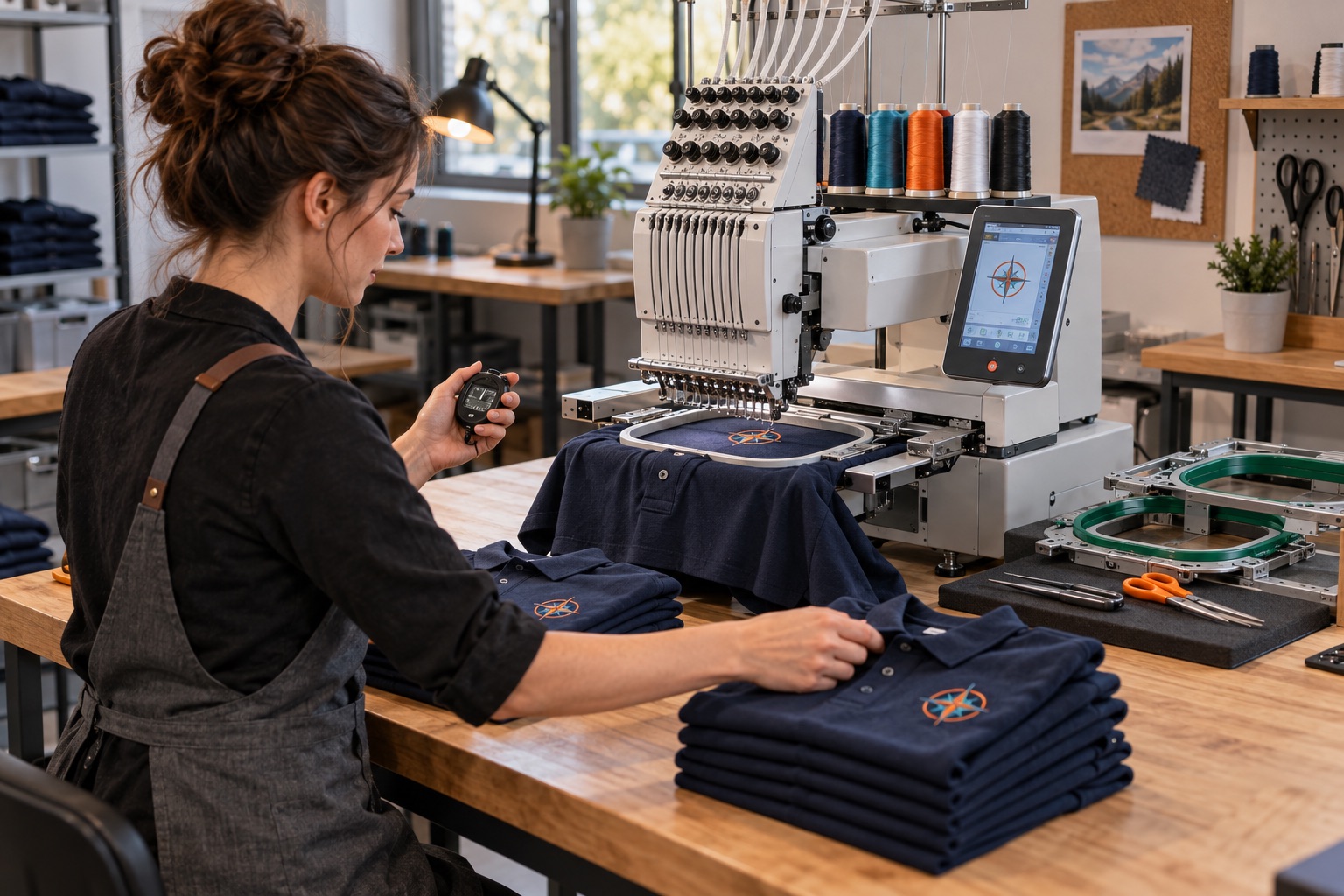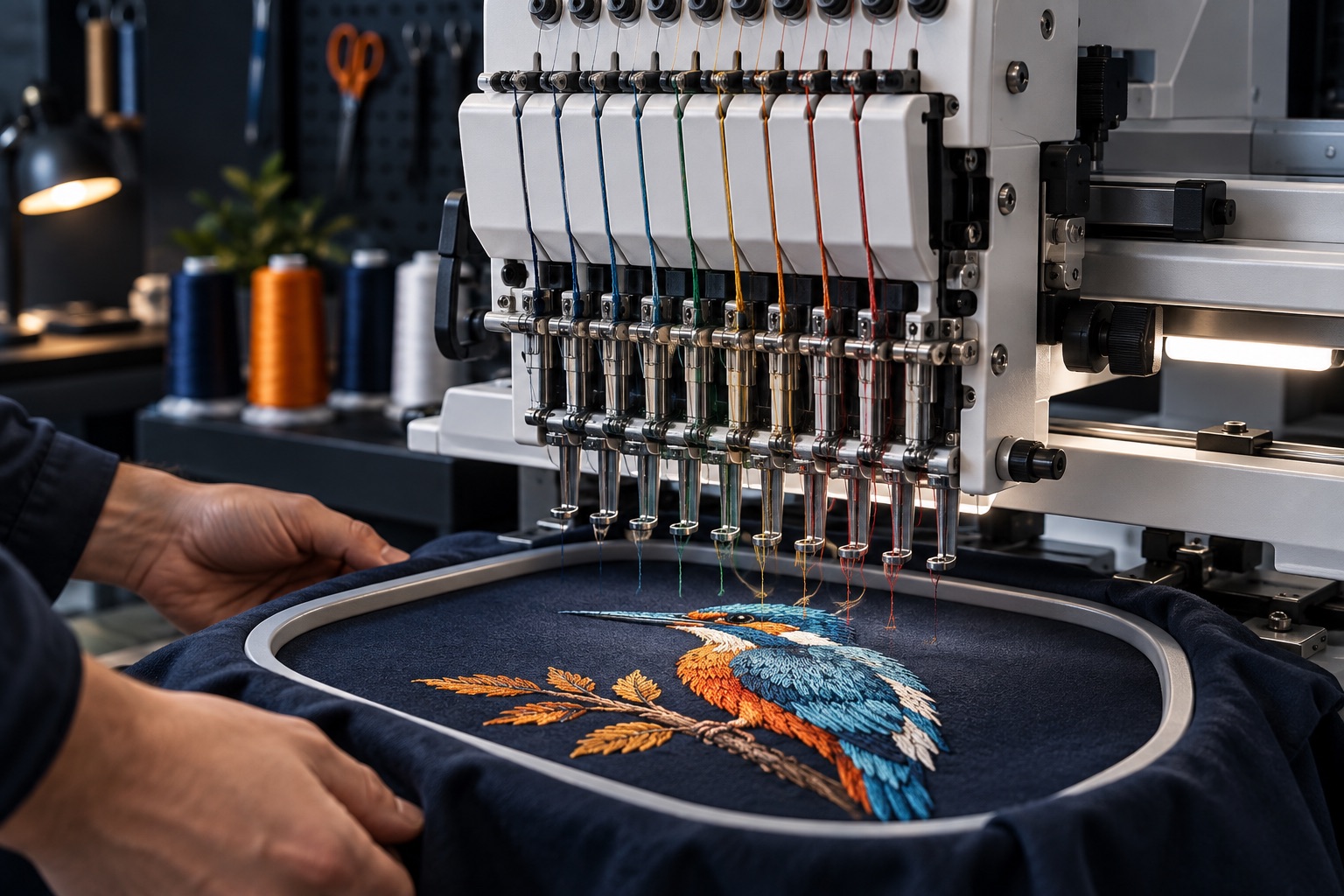
On a commercial embroidery machine, each needle position is normally threaded with a selected color. More needles can reduce manual rethreading, but needle count should still be chosen around the designs you produce.
Needles support color changes
A multi-needle head lets the operator prepare several thread colors before starting. The machine follows the programmed color sequence and moves between those needles during the design.
If a design uses more colors than the machine has available needles, the job can still be possible, but the operator may need to stop and rethread.
More is not automatically better
A design may contain many color-change commands while using fewer actual colors, or it may reuse the same colors in different sections. Review your common designs rather than choosing from a brochure number alone.
Also consider how often your shop switches between customer color palettes. Extra prepared colors can make mixed-order work more convenient.
Ask practical configuration questions
Confirm how the control panel displays color order, how easily the operator assigns needles and whether a design can pause for a manual thread change. Ask what needle system and common consumables the model uses.
Your supplier should also explain the threading path, tension controls and safe needle replacement procedure.
- Typical number of colors per design
- Frequency of palette changes
- Needle system and spare needles
- Color-sequence controls
- Training for threading and tension
Choose for the daily mix
The right needle count is the one that covers most jobs with minimal interruption while keeping the machine simple for your team. Send several real design files or screenshots with your inquiry so the recommendation reflects your actual work.
Machine configurations, commercial terms and support scope vary. Put the agreed details in your quotation and configuration sheet before ordering.