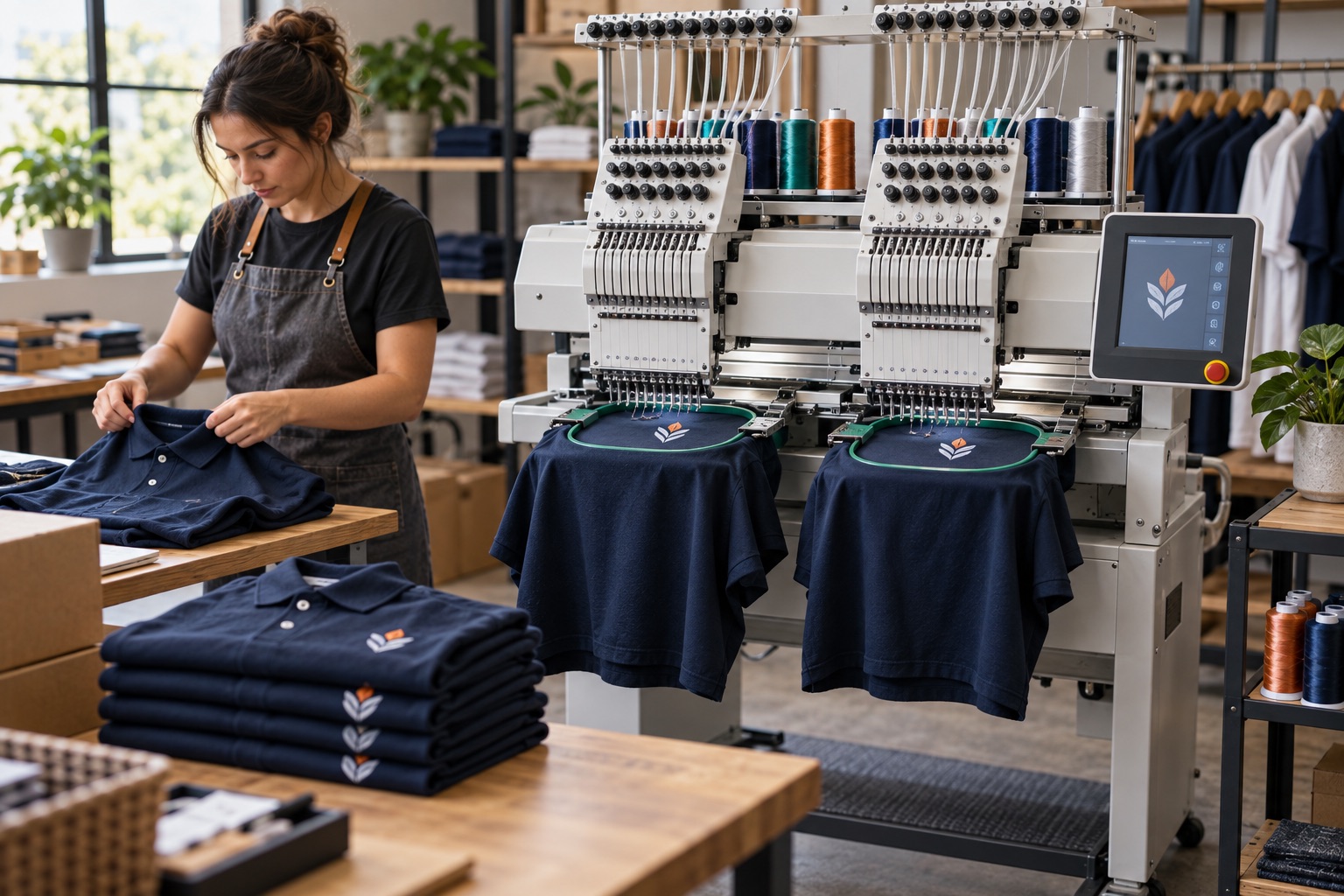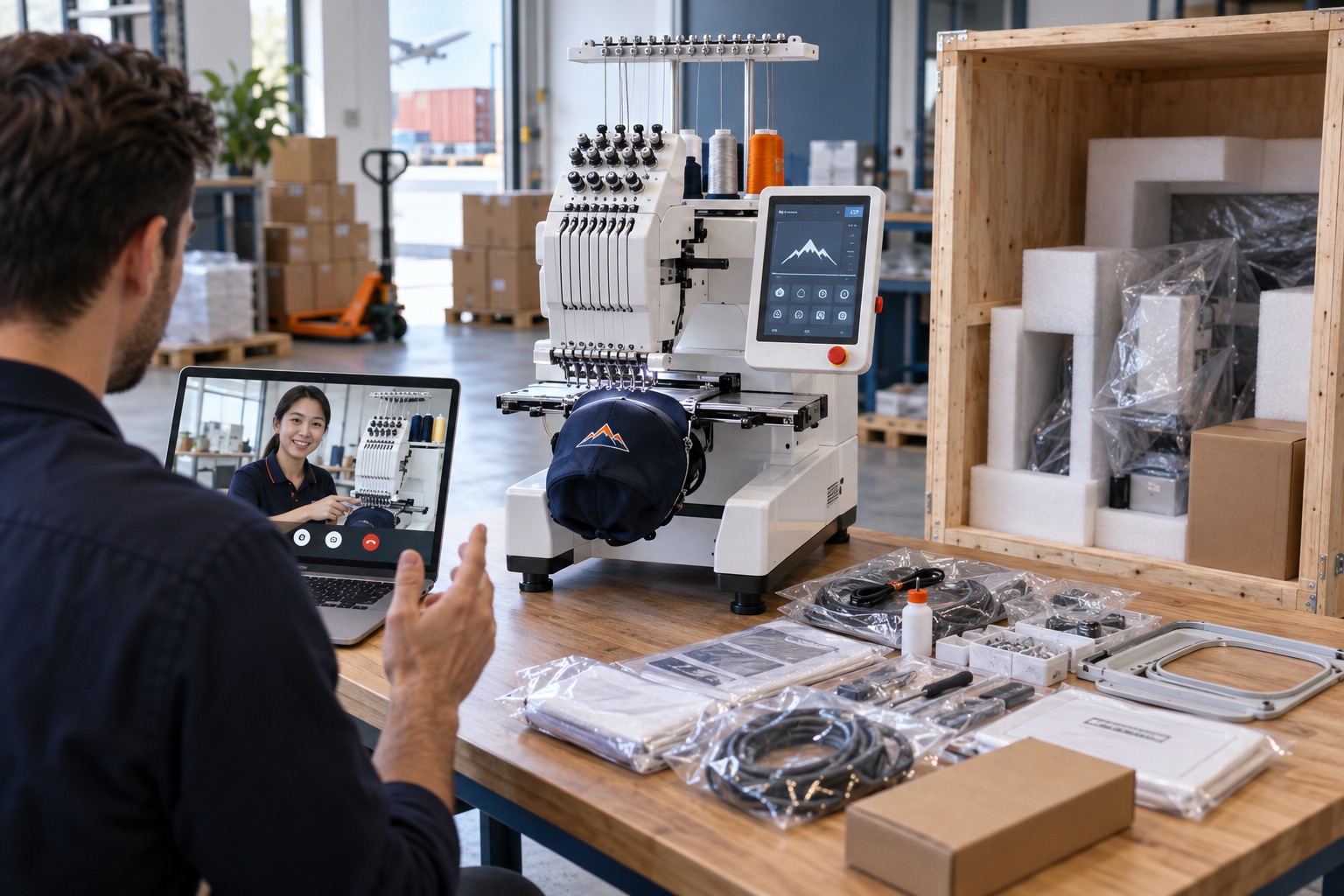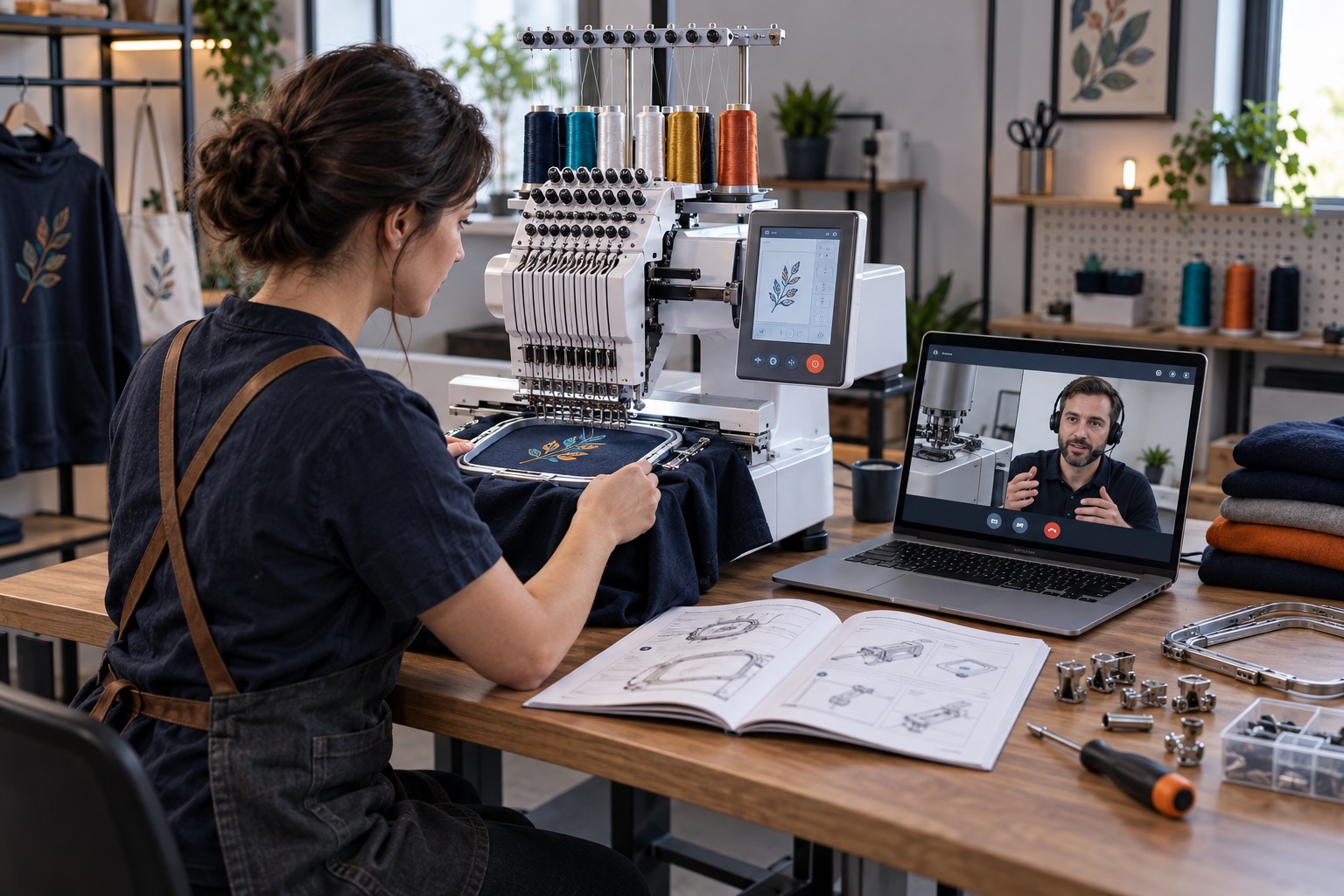
Support should be defined before the machine ships. A clear plan helps a first-time buyer move from unpacking to reliable production without guessing which channel or person handles each issue.
Ask for a training outline
Training should cover unpacking, setup, frame installation, threading, bobbins, design transfer, color sequence, tracing, basic operation, cleaning and common recovery steps.
Confirm whether training is provided through manuals, recorded video, live remote sessions or a combination.
Define the support channel
Know which messaging, email or video-call channel is used, the normal service hours and what information the technician needs. Photos, short videos, error messages and the machine identification can speed diagnosis.
Keep support communication organized by issue rather than sending unrelated questions in one thread.
Understand warranty scope
Ask what components and labor are covered, the coverage period, exclusions and the process for confirming a warranty fault. International support may involve shipping replacement parts and remote installation guidance rather than an on-site visit.
Clarify who pays freight and duties for replacement parts in different situations.
- Training topics and format
- Support contact and hours
- Information needed for diagnosis
- Warranty coverage and exclusions
- Replacement-part process
- Escalation for unresolved issues
Keep an operating record
Save manuals, configuration details, machine identification, parts lists and maintenance records in one location. This makes future support faster even if staff members change.
Machine configurations, commercial terms and support scope vary. Put the agreed details in your quotation and configuration sheet before ordering.