Single-head and two-head machines serve different production rhythms. The best choice is not simply the machine with more heads. It is the format that matches your order mix, staffing and available space.
When a single head is the better fit
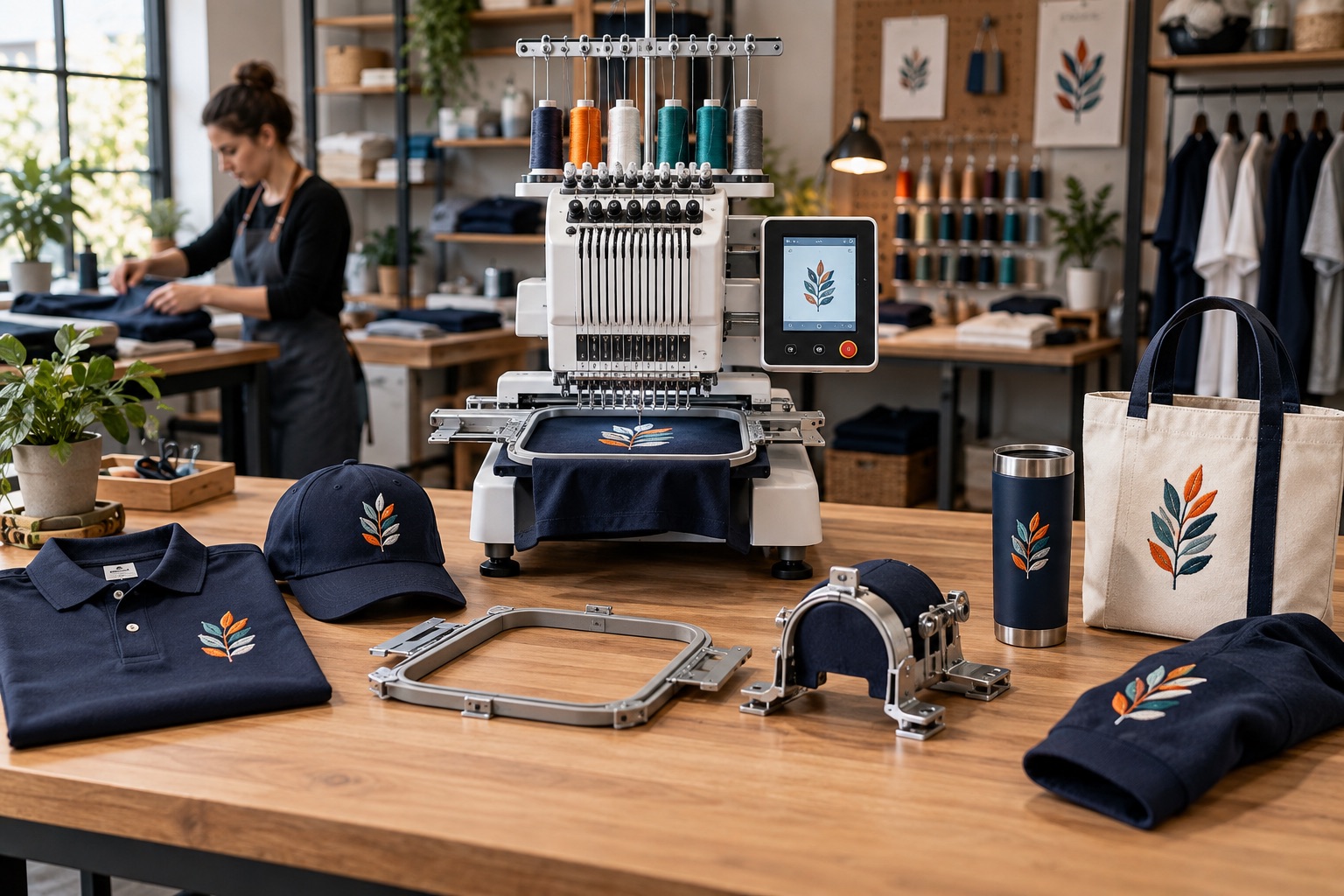
Choose a single-head machine when jobs change frequently, personalization is important or most orders are small. One machine can move between samples, names, patches, caps and garment placements without waiting for a matching second piece.
It also lowers the first investment and keeps the workflow simple for an owner-operated studio.
When two heads improve the workflow
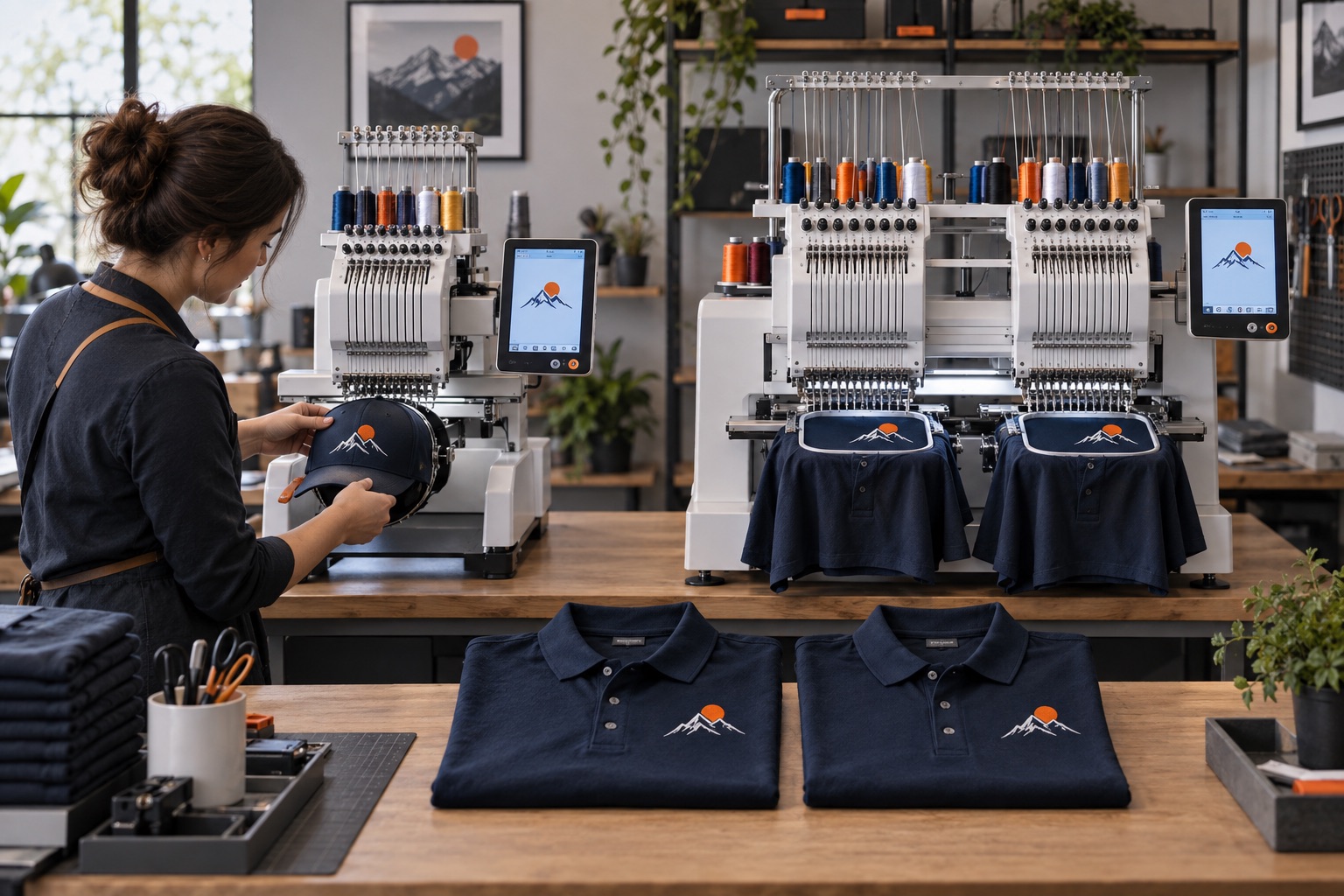
A two-head machine stitches the same design on two items in one run. It becomes valuable when repeat orders are common and you can regularly load two matching pieces. Uniforms, teamwear, branded caps and recurring company orders are typical examples.
Two heads can increase output without the footprint and staffing requirements of a large multi-head line.
Compare the whole production system
Think about hooping, loading, trimming, quality checks and design changes. A two-head machine only delivers its advantage when the operator can keep both stations supplied with matching work.
If your orders are highly varied, two independent single-head machines may offer more scheduling flexibility. If your orders repeat, one two-head machine can provide a cleaner paired workflow.
- Order size and repeat frequency
- Number of designs run each day
- Operator availability
- Floor space and access
- Budget for attachments and spares
A simple decision rule
Start with a single head when flexibility is the priority. Move toward two heads when paired production will be used consistently, not occasionally. Share your actual order examples with the supplier and ask for a configuration recommendation based on the work.
Machine configurations, commercial terms and support scope vary. Put the agreed details in your quotation and configuration sheet before ordering.